
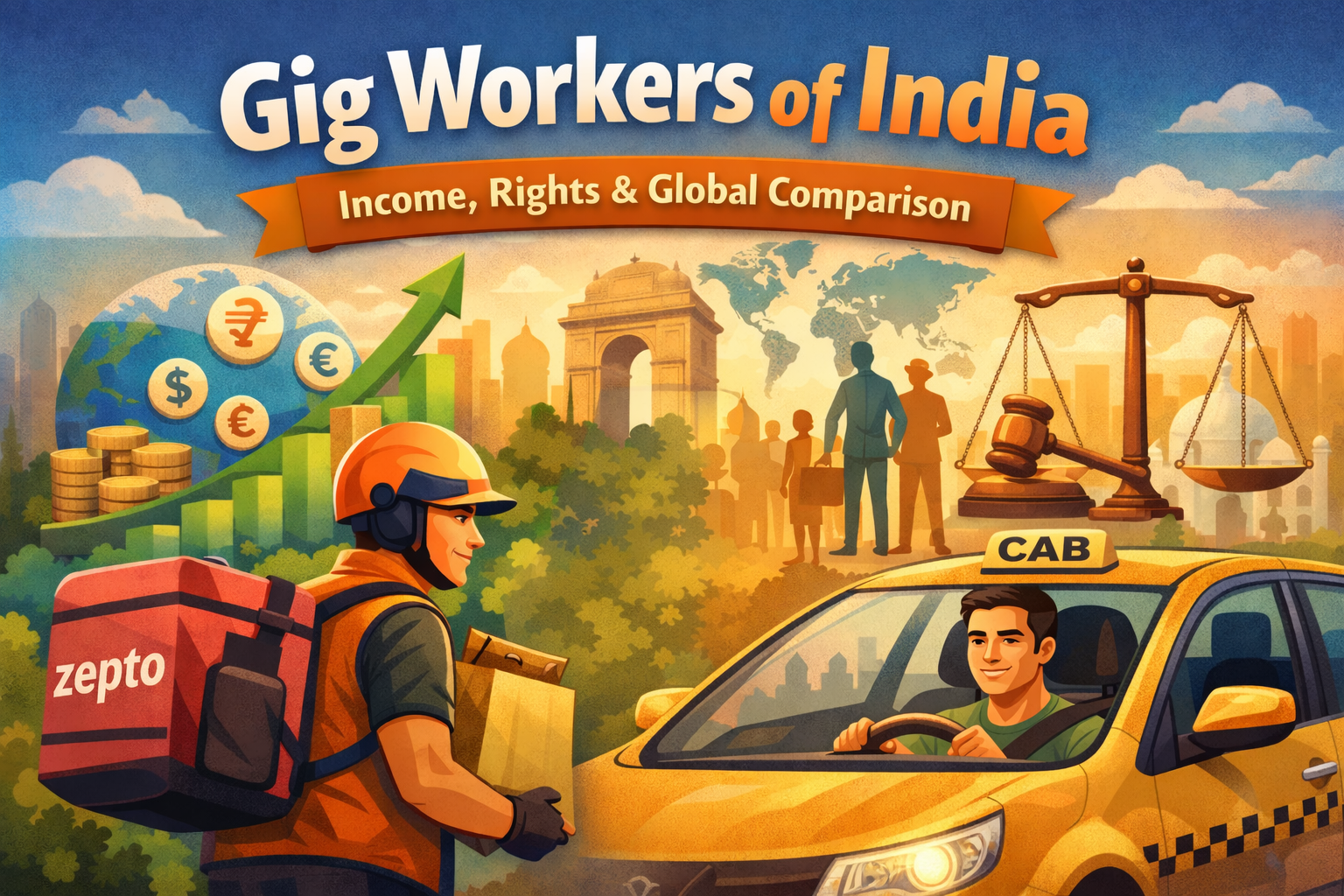
Gig workers are people who do small or short-term jobs using mobile apps or websites. These jobs include driving cabs, delivering food, sending parcels, or doing online tasks. They do not have a fixed office, fixed salary, or permanent boss. In India, millions of people work daily on apps like Uber, Swiggy, Zomato, and Ola.
गिग वर्कर वे लोग होते हैं जो मोबाइल ऐप या वेबसाइट के ज़रिए छोटे या अस्थायी काम करते हैं। इनमें कैब चलाना, खाना डिलीवर करना, पार्सल पहुँचाना या ऑनलाइन काम शामिल होता है। इनके पास न तो पक्का ऑफिस होता है और न ही फिक्स सैलरी। भारत में लाखों लोग रोज़ Uber, Swiggy, Zomato और Ola जैसे ऐप्स पर काम करते हैं।
how Gig Workers work?
Gig workers take jobs that may last for a few hours or a few days. They choose when and how much to work using mobile apps. In India, around one crore people work as gig workers today, and this number may double by 2030.
गिग वर्कर ऐसे काम करते हैं जो कुछ घंटों या कुछ दिनों के लिए होते हैं। वे मोबाइल ऐप के ज़रिए तय करते हैं कि कब और कितना काम करना है। भारत में आज लगभग एक करोड़ लोग गिग वर्क कर रहे हैं और यह संख्या 2030 तक दोगुनी हो सकती है।
Income and Daily Life of Gig Workers in India
Most gig workers in India earn less than ₹5 lakh per year. After expenses like fuel, mobile data, and vehicle repair, monthly income usually stays between ₹20,000 and ₹40,000. To earn this, many workers work 10 to 12 hours daily.
भारत में ज़्यादातर गिग वर्कर सालाना ₹5 लाख से कम कमाते हैं। पेट्रोल, मोबाइल डेटा और वाहन मरम्मत जैसे खर्च निकालने के बाद उनकी मासिक कमाई आमतौर पर ₹20,000 से ₹40,000 के बीच रहती है। इसके लिए कई लोग रोज़ 10–12 घंटे काम करते हैं।
Comparison with the United States
In the United States, gig workers earn much more per hour compared to India. However, high fuel costs, insurance, and rent reduce their final income. Many still do not get full benefits like paid leave or medical insurance.
अमेरिका में गिग वर्कर प्रति घंटे भारत से ज़्यादा कमाते हैं, लेकिन पेट्रोल, बीमा और महंगे किराए के कारण उनकी असली कमाई कम हो जाती है। वहाँ भी कई गिग वर्कर को पेड लीव या मेडिकल सुविधा नहीं मिलती।
Gig Workers in Africa
In African countries, gig work is growing due to lack of regular jobs. Earnings are low, roads are poor, and fuel is costly. Many workers face theft, accidents, and no legal protection.
अफ्रीका के देशों में नौकरी की कमी के कारण गिग वर्क तेज़ी से बढ़ रहा है। कम कमाई, खराब सड़कें और महंगा ईंधन बड़ी समस्याएँ हैं। चोरी, दुर्घटना और कानूनी सुरक्षा की कमी आम बात है।
Gig Work in Europe
European countries provide better protection to gig workers. Many platforms are required to offer insurance, fair pay, and rest breaks. Governments closely monitor app algorithms to prevent unfair pay cuts.
यूरोप में गिग वर्कर को बेहतर सुरक्षा मिलती है। कई प्लेटफॉर्म को बीमा, उचित वेतन और आराम का समय देना पड़ता है। सरकारें ऐप के सिस्टम पर नज़र रखती हैं ताकि अनुचित कटौती न हो।
Gig Workers in Austria
Austria offers good pay and strong social security for gig workers. Skilled gig workers earn very high hourly rates. Clean transport systems and clear laws make gig work easier.
ऑस्ट्रिया में गिग वर्कर को अच्छी कमाई और मज़बूत सामाजिक सुरक्षा मिलती है। कुशल गिग वर्कर बहुत ज़्यादा प्रति घंटे कमाते हैं। साफ़ परिवहन व्यवस्था और स्पष्ट कानून काम को आसान बनाते हैं।
Gig Workers in Australia
Australia treats many gig workers as employees if apps control their work. Workers receive minimum wages, pension contributions, accident insurance, and protection from unfair removal.
ऑस्ट्रेलिया में अगर ऐप काम को नियंत्रित करता है तो गिग वर्कर को कर्मचारी माना जाता है। उन्हें न्यूनतम वेतन, पेंशन, दुर्घटना बीमा और गलत तरीके से हटाए जाने से सुरक्षा मिलती है।
Gig Workers in Russia
Russia’s gig economy is growing through taxi and delivery apps. Workers earn more than in India, but cold weather, long waiting hours, and rising fuel costs make work difficult. Legal rights remain limited.
रूस में टैक्सी और डिलीवरी ऐप के ज़रिए गिग इकोनॉमी बढ़ रही है। भारत से कमाई ज़्यादा है, लेकिन कड़ाके की ठंड, लंबा इंतज़ार और बढ़ता ईंधन खर्च काम को मुश्किल बनाता है। कानूनी अधिकार सीमित हैं।
China’s Massive Gig Workforce
China has the world’s largest gig workforce, mainly in food delivery. Earnings are higher than India, but work pressure is intense. Algorithms punish delays, though some cities offer social insurance.
चीन में दुनिया की सबसे बड़ी गिग वर्कफोर्स है, खासकर फूड डिलीवरी में। भारत से कमाई ज़्यादा है लेकिन काम का दबाव बहुत ज़्यादा है। देर होने पर ऐप सज़ा देता है, हालांकि कुछ शहरों में सामाजिक बीमा मिलता है।
Gig Work in Japan
Japan has fewer gig workers due to strict labor laws. Many delivery workers are treated as employees. Safety, discipline, and public transport reduce work stress.
जापान में सख्त श्रम कानूनों के कारण गिग वर्कर कम हैं। कई डिलीवरी वर्कर को कर्मचारी माना जाता है। सुरक्षा, अनुशासन और बेहतर सार्वजनिक परिवहन से तनाव कम रहता है।
New Zealand’s Fair Gig System
New Zealand provides strong protection to gig workers. Minimum wage, paid holidays, fuel reimbursement, and pension savings are common. Short travel distances help workers earn better.
न्यूज़ीलैंड में गिग वर्कर को मज़बूत सुरक्षा मिलती है। न्यूनतम वेतन, पेड छुट्टियाँ, ईंधन खर्च और पेंशन आम सुविधाएँ हैं। कम दूरी के कारण काम आसान होता है।
Gig Workers in Pakistan
Pakistan’s gig economy is similar to India but earnings are slightly lower. Workers face power cuts, floods, poor roads, and lack of insurance. Protests for fair pay are increasing.
पाकिस्तान की गिग इकोनॉमी भारत जैसी है लेकिन कमाई थोड़ी कम है। बिजली कटौती, बाढ़, खराब सड़कें और बीमा की कमी बड़ी समस्याएँ हैं। उचित वेतन के लिए विरोध बढ़ रहा है।
Gig Workers in Turkey
Turkey’s gig market is expanding fast in cities. Earnings are higher than India, but inflation and natural disasters reduce savings. Workers remain mostly self-employed.
तुर्की में शहरों में गिग मार्केट तेज़ी से बढ़ रहा है। कमाई भारत से बेहतर है, लेकिन महंगाई और प्राकृतिक आपदाएँ बचत को कम कर देती हैं। अधिकतर वर्कर स्व-रोज़गार माने जाते हैं।
Legal Rights and Facilities for Gig Workers in India
India has started giving legal protection to gig workers under new labour laws. Insurance, health coverage, and pension plans are being introduced, but awareness and enforcement remain weak.
भारत में नए श्रम कानूनों के तहत गिग वर्कर को कानूनी सुरक्षा मिलनी शुरू हुई है। बीमा, स्वास्थ्य सुविधा और पेंशन योजनाएँ लाई जा रही हैं, लेकिन जागरूकता और लागू करना अभी कमज़ोर है।
Major Challenges Faced by Gig Workers
Gig workers struggle with unstable income, health risks, sudden app rule changes, and lack of voice. Women and migrant workers face additional safety and housing issues.
गिग वर्कर को अनिश्चित कमाई, स्वास्थ्य जोखिम, ऐप के अचानक बदलते नियम और आवाज़ की कमी से जूझना पड़ता है। महिलाओं और प्रवासी वर्कर को सुरक्षा और आवास की अतिरिक्त समस्या होती है।
Simple Solutions to Improve Gig Workers’ Lives in India
India can improve gig work by fixing minimum hourly pay, mandatory insurance, pension schemes, fair algorithms, worker unions, skill training, and better city infrastructure.
भारत न्यूनतम प्रति घंटे वेतन, अनिवार्य बीमा, पेंशन योजना, निष्पक्ष ऐप सिस्टम, यूनियन, स्किल ट्रेनिंग और बेहतर शहरी सुविधाओं से गिग वर्कर की ज़िंदगी सुधार सकता है।
Conclusion: A Better Future for Gig Workers
Gig work can become a respected and stable career in India with fair pay, safety, and dignity. Learning from global examples can help millions of workers live better lives.
उचित वेतन, सुरक्षा और सम्मान के साथ गिग वर्क भारत में एक स्थिर करियर बन सकता है। दुनिया के उदाहरणों से सीखकर लाखों गिग वर्कर का भविष्य बेहतर बनाया जा सकता है।
Frequently Asked Questions (FAQs)
Who are gig workers in India?
Gig workers in India are people who earn money by doing short-term or task-based jobs through mobile apps or websites. These jobs include cab driving, food delivery, courier services, and online freelance work.
भारत में गिग वर्कर वे लोग होते हैं जो मोबाइल ऐप या वेबसाइट के ज़रिए छोटे या अस्थायी काम करके पैसा कमाते हैं। इनमें कैब चलाना, खाना डिलीवर करना, कूरियर सेवा और ऑनलाइन फ्रीलांस काम शामिल हैं।
How much do gig workers earn in India?
Most gig workers in India earn between ₹20,000 and ₹40,000 per month after expenses. Actual income depends on working hours, city demand, fuel costs, and incentives offered by platforms.
भारत में ज़्यादातर गिग वर्कर खर्च निकालने के बाद ₹20,000 से ₹40,000 प्रति माह कमाते हैं। उनकी कमाई काम के घंटे, शहर की मांग, ईंधन खर्च और ऐप से मिलने वाले इंसेंटिव पर निर्भर करती है।
Are gig workers protected by law in India?
Yes, gig workers are now covered under new labour laws in India. These laws provide access to accident insurance, health benefits, and social security schemes, though implementation is still limited.
हाँ, भारत में नए श्रम कानूनों के तहत गिग वर्कर को कानूनी सुरक्षा मिल रही है। इन कानूनों में दुर्घटना बीमा, स्वास्थ्य सुविधा और सामाजिक सुरक्षा योजनाएँ शामिल हैं, लेकिन इन्हें पूरी तरह लागू किया जाना अभी बाकी है।
What problems do gig workers face in India?
Gig workers face problems like unstable income, long working hours, lack of paid leave, health risks, sudden changes in app rules, and no strong platform to raise complaints.
गिग वर्कर को अनिश्चित कमाई, लंबे काम के घंटे, पेड छुट्टी की कमी, स्वास्थ्य जोखिम, ऐप के अचानक बदलते नियम और शिकायत दर्ज करने के लिए मजबूत मंच की कमी जैसी समस्याओं का सामना करना पड़ता है।
Which countries treat gig workers better than India?
Countries like Australia, New Zealand, Austria, and many European nations provide better pay, insurance, pension benefits, and legal protection to gig workers compared to India.
ऑस्ट्रेलिया, न्यूज़ीलैंड, ऑस्ट्रिया और कई यूरोपीय देश भारत की तुलना में गिग वर्कर को बेहतर वेतन, बीमा, पेंशन और कानूनी सुरक्षा प्रदान करते हैं।
What can India do to improve the lives of gig workers?
India can improve gig workers’ lives by fixing minimum hourly wages, making insurance mandatory, introducing pension schemes, allowing worker unions, and ensuring fair app algorithms.
भारत गिग वर्कर की ज़िंदगी सुधारने के लिए न्यूनतम प्रति घंटे वेतन तय कर सकता है, बीमा अनिवार्य बना सकता है, पेंशन योजना शुरू कर सकता है, यूनियन की अनुमति दे सकता है और ऐप सिस्टम को निष्पक्ष बना सकता है।
क्विक-कॉमर्स प्लेटफॉर्म पर “10 मिनट डिलीवरी” प्रतिबंध
भारतीय सरकार ने क्विक-कॉमर्स प्लेटफॉर्म्स को “10 मिनट डिलीवरी” वादों को बढ़ावा देने से रोकने का निर्देश दिया है, क्योंकि इससे गिग वर्कर्स की सुरक्षा पर खतरा हो सकता है। ब्लिंकिट, जेप्टो और स्विगी के इंस्टामार्ट जैसे बड़े खिलाड़ी हाल ही में हुई हड़तालों और श्रम मंत्रालय की बैठकों के बाद अपने ऐप्स और मार्केटिंग से ऐसे दावे हटा चुके हैं।
सामाजिक सुरक्षा अपडेट
केंद्र सरकार सोशल सिक्योरिटी कोड 2020 के तहत मसौदा नियमों की समीक्षा कर रही है, जिसमें गिग वर्कर्स के लिए स्वास्थ्य, दुर्घटना बीमा और अन्य लाभों तक पहुंच के लिए 90 दिन के न्यूनतम कार्य सीमा को घटाने पर विचार किया जा रहा है। यूनियनों की मांग है कि 60 दिन की सीमा हो, क्योंकि वर्तमान नियमों के कारण कई लोग अनियमित पैटर्न के कारण बाहर रह जाते हैं, जबकि मल्टी-प्लेटफॉर्म वर्कर्स के लिए 120 दिन की आवश्यकता होती है ।
New update on Social security bill
The Code on Social Security, 2020, is India’s central legislation providing gig and platform workers with social security benefits like life and disability insurance, accident coverage, health and maternity aid, old age support, and skill training, funded by aggregators contributing 1-2% of their annual turnover (capped at 5% of worker payouts) to welfare funds, without classifying workers as employees. Workers aged 16+ register via the e-Shram portal using Aadhaar to access these schemes, overseen by a National Social Security Board with states managing implementation; as of early 2026, central rules are notified but full rollout varies by state.
Feedback & Comments:
If you have any questions about this article or would like to share your thoughts, please leave a comment in the section below.
Disclaimer:
This article has been prepared after thorough research and study. We strive for accuracy in all our content. However, if you notice any errors, please help us improve them by pointing them out in the comment box.
Last updated : February 2026