
Applying Muda, Mura, and Muri in Middle-Mile Logistics
Middle-mile logistics is the backbone of every supply chain. It connects warehouses, fulfillment centers, distribution hubs, and retail stores. If this movement is not planned properly, operations become slow, expensive, and stressful.
This is where the Lean concepts of Muda, Mura, and Muri become very useful. These three Japanese terms help businesses identify waste, imbalance, and overburden so that logistics operations become faster, smoother, and more cost-effective.
मिडिल-माइल लॉजिस्टिक्स में Muda, Mura और Muri का महत्व
मिडिल-माइल लॉजिस्टिक्स सप्लाई चेन का सबसे महत्वपूर्ण हिस्सा है। यह वेयरहाउस, हब, फुलफिलमेंट सेंटर और रिटेल स्टोर्स को जोड़ता है। यदि इस प्रक्रिया की सही योजना नहीं बनाई जाए, तो लागत बढ़ती है, डिलीवरी में देरी होती है और कर्मचारियों पर अतिरिक्त दबाव पड़ता है।
यहीं पर जापानी Lean सिद्धांत Muda, Mura और Muri काम आते हैं। इनकी मदद से कंपनियां वेस्ट (Waste), असंतुलन (Unevenness) और ओवरबर्डन (Overburden) की पहचान करके अपने लॉजिस्टिक्स ऑपरेशन को बेहतर बना सकती हैं।
What Do Muda, Mura and Muri Mean?
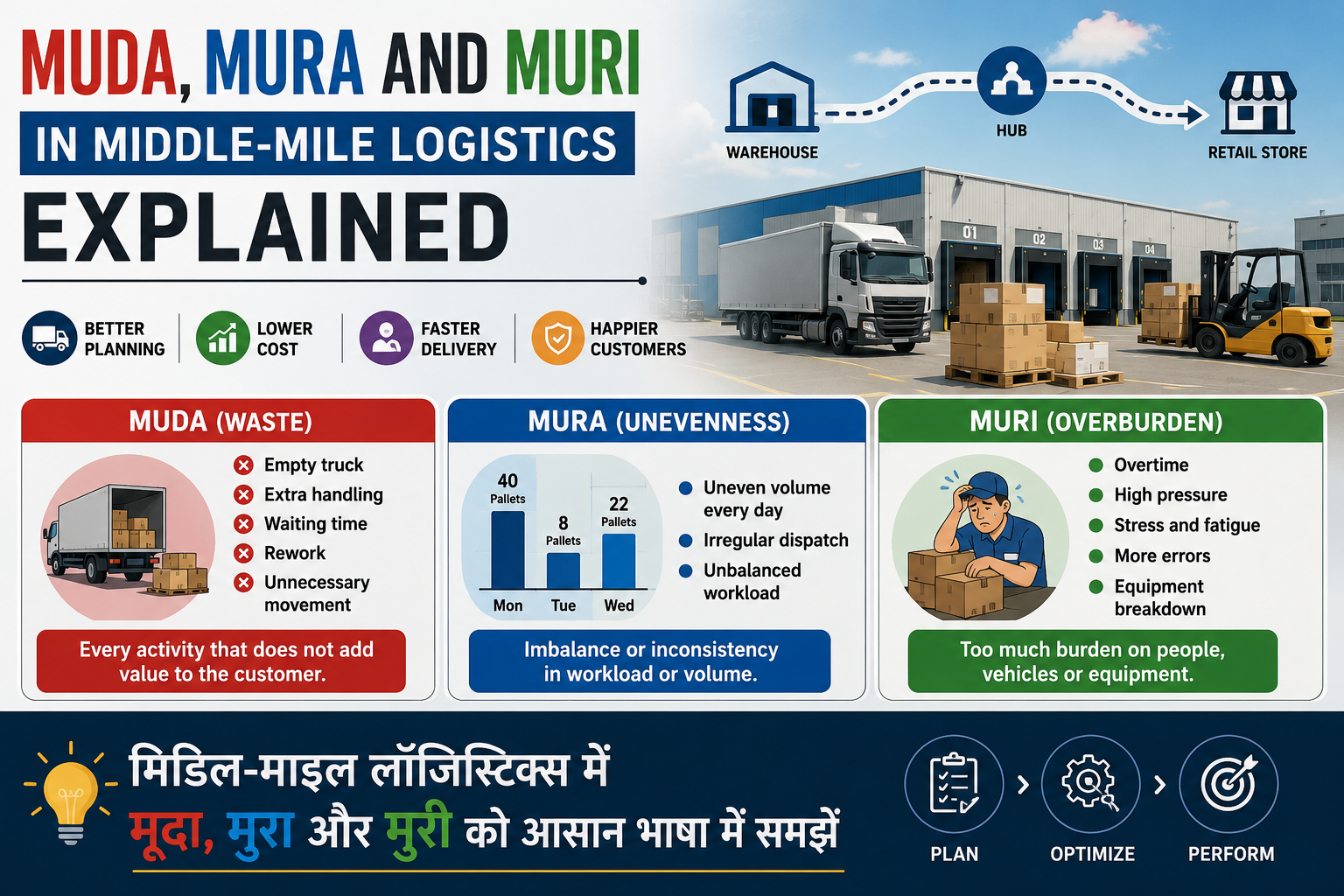
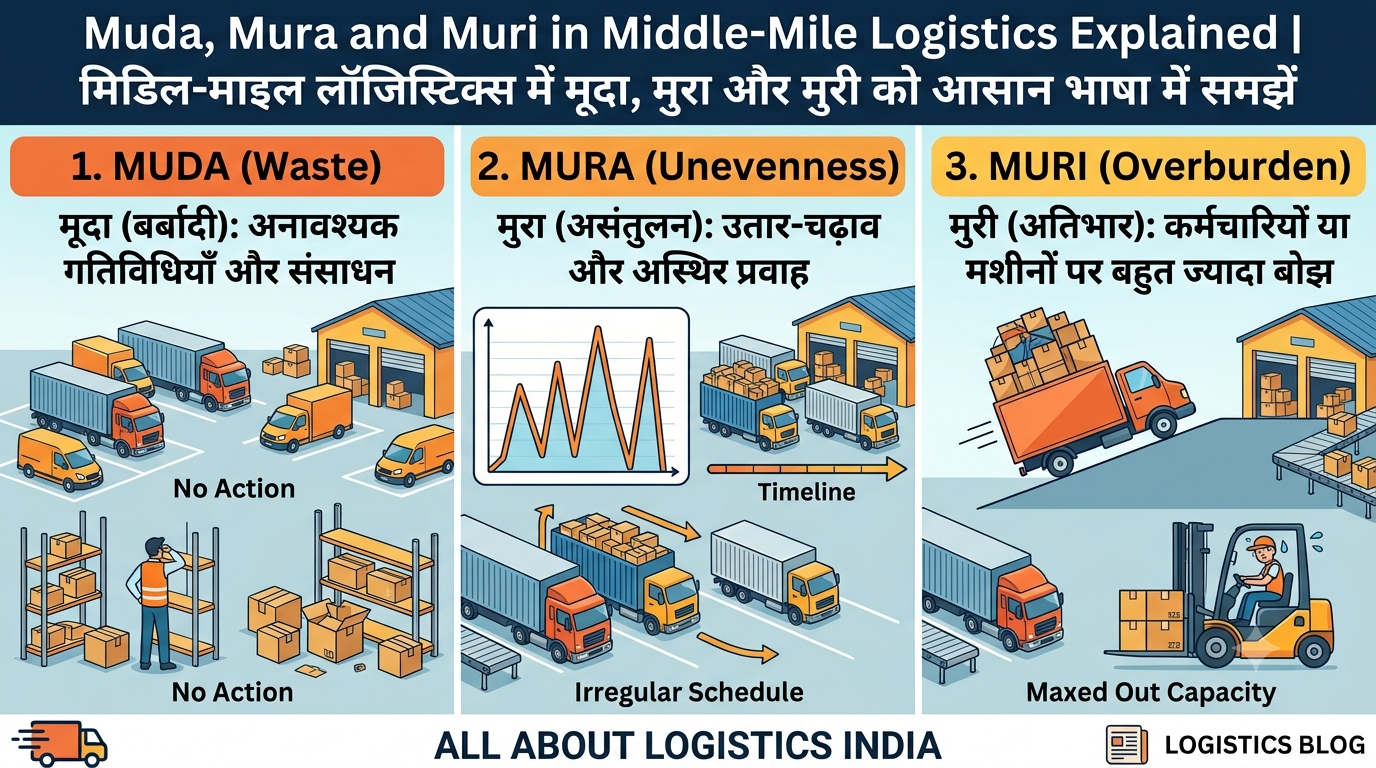
- Muda (Waste): Any activity that does not add value to the customer. Examples include waiting time, unnecessary movement, extra handling, empty truck space, and repeated work.
- Mura (Unevenness): An imbalance in workload or shipment volume. Some days may have too many shipments while other days have very few.
- Muri (Overburden): Putting too much pressure on people, trucks, machines, or equipment because of poor planning or unrealistic schedules.
हिंदी में समझें
- Muda (मूदा): ऐसा कोई भी काम जिससे ग्राहक को कोई अतिरिक्त लाभ नहीं मिलता। जैसे खाली ट्रक चलाना, बार-बार सामान उठाना या अनावश्यक इंतजार।
- Mura (मुरा): काम या शिपमेंट का असंतुलन। किसी दिन बहुत ज्यादा लोड और किसी दिन बहुत कम लोड होना।
- Muri (मुरी): कर्मचारियों, ट्रकों या मशीनों पर जरूरत से ज्यादा दबाव डालना।
Middle-Mile Logistics Example
Imagine a regional distribution hub that supplies 25 retail stores.
Its dispatch schedule looks like this:
- Monday – 40 pallets
- Tuesday – 8 pallets
- Wednesday – 22 pallets
Because shipment volumes change every day, trucks often leave half empty. On busy days, loaders rush to finish loading, drivers work overtime, and mistakes increase.
Where do Muda, Mura and Muri appear?
- Mura: Shipment volume is not balanced across the week.
- Muri: Staff and drivers become overloaded on peak days.
- Muda: Half-loaded trucks, unnecessary handling, waiting time and rework increase operational cost.
इसी उदाहरण को हिंदी में समझें
मान लीजिए कि एक रीजनल हब 25 स्टोर्स को सामान भेजता है।
- सोमवार – 40 पैलेट
- मंगलवार – 8 पैलेट
- बुधवार – 22 पैलेट
लोड हर दिन अलग-अलग होने के कारण कई ट्रक आधे खाली निकलते हैं। व्यस्त दिनों में कर्मचारियों को जल्दी-जल्दी काम करना पड़ता है और ड्राइवरों को ओवरटाइम करना पड़ता है।
- मुरा: हर दिन काम का संतुलन नहीं है।
- मुरी: कर्मचारियों और ड्राइवरों पर अतिरिक्त दबाव पड़ता है।
- मूदा: खाली ट्रक, दोबारा हैंडलिंग और इंतजार से लागत बढ़ती है।
Operational Impact
- Higher transportation cost because trucks are not fully utilized.
- More delivery delays due to poor planning.
- Lower employee productivity.
- Higher fuel consumption.
- More vehicle wear and tear.
- Increased customer complaints.
ऑपरेशन पर प्रभाव
- प्रति ट्रिप लागत बढ़ जाती है।
- डिलीवरी में देरी होती है।
- कर्मचारियों की उत्पादकता कम हो जाती है।
- ईंधन की खपत बढ़ जाती है।
- वाहनों का रखरखाव खर्च बढ़ता है।
- ग्राहकों की शिकायतें बढ़ सकती हैं।
How to Reduce Muda, Mura and Muri?
- Plan dispatches evenly throughout the week.
- Consolidate shipments before dispatch.
- Improve truck utilization and fill rate.
- Use standard loading and scanning procedures.
- Track KPIs like truck fill rate, loading time, touches per pallet and daily shipment variance.
- Use forecasting to balance demand.
- Avoid last-minute dispatch planning.
समाधान क्या है?
- सप्ताह भर में समान रूप से डिस्पैच की योजना बनाएं।
- कम मात्रा वाले शिपमेंट को एक साथ भेजें।
- ट्रकों की क्षमता का बेहतर उपयोग करें।
- लोडिंग और स्कैनिंग की एक समान प्रक्रिया अपनाएं।
- Truck Fill Rate, Loading Time और Daily Volume जैसे KPI नियमित रूप से ट्रैक करें।
- बेहतर Forecasting करें।
- अंतिम समय की योजना बनाने से बचें।
Key Takeaway
These three Lean concepts are closely connected.
- Mura (Unevenness) creates Muri (Overburden).
- Muri (Overburden) creates Muda (Waste).
- Removing all three helps build a faster, safer and more efficient middle-mile logistics network.
निष्कर्ष
यदि मिडिल-माइल लॉजिस्टिक्स में मुरा को कम किया जाए, तो मुरी अपने आप कम होगा। जब कर्मचारियों और संसाधनों पर दबाव कम होगा, तो मूदा यानी वेस्ट भी कम हो जाएगा। इसलिए सफल लॉजिस्टिक्स ऑपरेशन का पहला कदम है – संतुलित योजना, बेहतर संसाधन उपयोग और लगातार सुधार।
Frequently Asked Questions (FAQs)
1. What is Muda in logistics?
Muda means waste. It includes unnecessary transportation, waiting time, empty truck movement, repeated handling, and other activities that do not add customer value.
2. What is Mura in supply chain?
Mura means unevenness in workload, shipment volume, or production. It creates instability in operations.
3. What is Muri in logistics?
Muri means overburden on employees, vehicles, or equipment caused by poor planning or excessive workload.
4. How are Muda, Mura and Muri connected?
Mura creates Muri, and Muri creates Muda. Reducing unevenness helps reduce both overburden and waste.
5. Why are these Lean concepts important in middle-mile logistics?
They help improve truck utilization, reduce transportation costs, increase productivity, minimize delays, and improve customer service.
6. Can small logistics companies also use Muda, Mura and Muri?
Yes. These Lean principles can improve operations for businesses of all sizes by reducing waste and improving efficiency.