
D2C vs B2C: Complete Guide with Indian Logistics Examples (2026)
Introduction
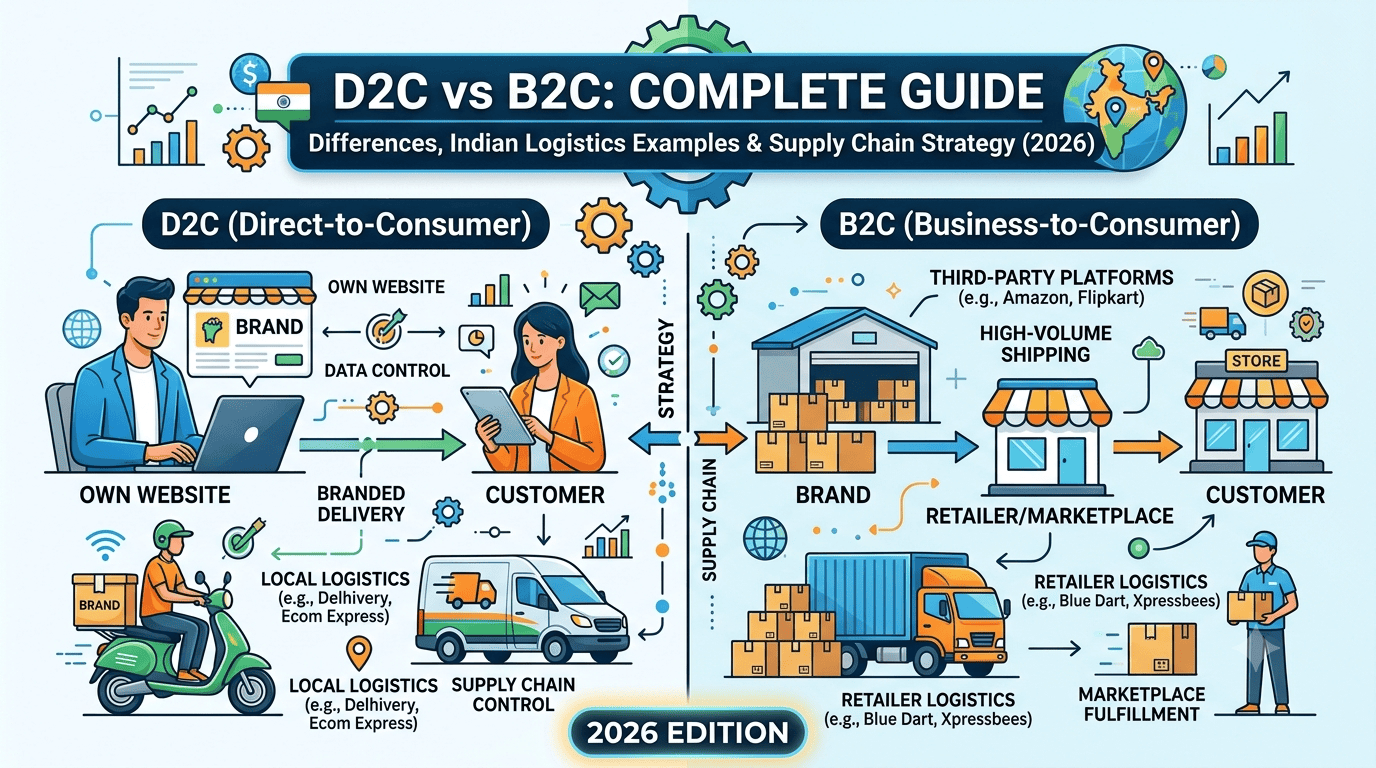
Whether you are launching an eCommerce startup, managing a supply chain, or simply trying to understand modern retail, knowing the difference between D2C (Direct-to-Consumer) and B2C (Business-to-Consumer) is essential. Although both models ultimately sell products to consumers, they differ significantly in customer ownership, inventory planning, warehousing, fulfilment, marketing, and logistics operations.
चाहे आप नया ई-कॉमर्स व्यवसाय शुरू कर रहे हों, सप्लाई चेन का प्रबंधन कर रहे हों या आधुनिक रिटेल मॉडल को समझना चाहते हों, D2C (डायरेक्ट-टू-कंज्यूमर) और B2C (बिजनेस-टू-कंज्यूमर) के बीच का अंतर जानना बेहद आवश्यक है। दोनों मॉडल ग्राहकों तक उत्पाद पहुंचाते हैं, लेकिन ग्राहक नियंत्रण, इन्वेंट्री प्रबंधन, वेयरहाउसिंग, फुलफिलमेंट, मार्केटिंग और लॉजिस्टिक्स के तरीके एक-दूसरे से काफी अलग होते हैं।
Selecting the right business model has a direct impact on operational efficiency, customer satisfaction, logistics costs, and long-term profitability. In this guide, you’ll learn the fundamentals of D2C and B2C through easy-to-understand explanations and real Indian business examples.
सही बिजनेस मॉडल का चुनाव आपकी संचालन क्षमता, ग्राहक संतुष्टि, लॉजिस्टिक्स लागत और लंबे समय की लाभप्रदता को सीधे प्रभावित करता है। इस विस्तृत गाइड में आप सरल भाषा और भारतीय उदाहरणों के माध्यम से D2C और B2C दोनों मॉडलों को गहराई से समझेंगे।
What is D2C (Direct-to-Consumer)?
D2C, or Direct-to-Consumer, is a business model in which a manufacturer or brand sells its products directly to customers without involving wholesalers, distributors, or traditional retail stores. Customers purchase products through the brand’s official website, mobile application, exclusive stores, or social commerce platforms.
D2C (डायरेक्ट-टू-कंज्यूमर) एक ऐसा बिजनेस मॉडल है जिसमें निर्माता या ब्रांड अपने उत्पाद सीधे अंतिम ग्राहक को बेचता है। इसमें थोक विक्रेता, डिस्ट्रीब्यूटर या पारंपरिक रिटेल स्टोर जैसे मध्यस्थ शामिल नहीं होते। ग्राहक कंपनी की आधिकारिक वेबसाइट, मोबाइल ऐप, ब्रांड स्टोर या सोशल कॉमर्स प्लेटफॉर्म के माध्यम से सीधे खरीदारी करते हैं।
Since the brand controls the complete buying journey—from product discovery and checkout to packaging, shipping, customer support, and returns—it owns valuable first-party customer data. This enables businesses to personalise marketing campaigns, improve customer experience, and build long-term customer loyalty.
इस मॉडल में कंपनी ग्राहक की पूरी खरीदारी प्रक्रिया पर नियंत्रण रखती है, जिसमें उत्पाद की खोज, भुगतान, पैकेजिंग, शिपिंग, ग्राहक सहायता और रिटर्न शामिल हैं। साथ ही कंपनी के पास ग्राहकों का महत्वपूर्ण डेटा भी रहता है, जिससे वह बेहतर मार्केटिंग कर सकती है, व्यक्तिगत ऑफर दे सकती है और ग्राहकों के साथ लंबे समय का संबंध बना सकती है।
What is B2C (Business-to-Consumer)?
B2C (Business-to-Consumer) is a broader business model where companies sell products or services directly to individual consumers through multiple sales channels. These channels may include physical retail stores, supermarkets, online marketplaces, brand websites, or mobile applications.
B2C (बिजनेस-टू-कंज्यूमर) एक व्यापक बिजनेस मॉडल है, जिसमें कंपनियां अपने उत्पाद या सेवाएं विभिन्न माध्यमों से सीधे ग्राहकों तक पहुंचाती हैं। इन माध्यमों में रिटेल स्टोर, सुपरमार्केट, ऑनलाइन मार्केटप्लेस, ब्रांड की वेबसाइट और मोबाइल ऐप शामिल हो सकते हैं।
Unlike a pure D2C model, many B2C businesses depend on third-party retailers or marketplaces for customer acquisition and order fulfilment. In such cases, the platform usually manages payment processing, delivery, customer service, and returns, while the brand has limited access to customer information.
शुद्ध D2C मॉडल की तुलना में कई B2C व्यवसाय ग्राहकों तक पहुंचने और ऑर्डर पूरा करने के लिए थर्ड-पार्टी रिटेलर्स या ऑनलाइन मार्केटप्लेस पर निर्भर रहते हैं। ऐसे मामलों में भुगतान, डिलीवरी, ग्राहक सहायता और रिटर्न की प्रक्रिया अक्सर प्लेटफॉर्म द्वारा संचालित की जाती है, जबकि ब्रांड के पास ग्राहक संबंधी सीमित जानकारी होती है।
D2C vs B2C Explained with Simple Examples
Example 1: D2C Business Model
Imagine a startup that manufactures premium travel jackets. Instead of selling through retail stores, the company accepts orders only through its official website and mobile application. It manages digital marketing, processes customer orders, packs products in branded packaging, selects its preferred courier partners, and independently handles customer support and returns.
मान लीजिए एक स्टार्टअप प्रीमियम ट्रैवल जैकेट बनाता है। वह अपने उत्पाद किसी रिटेल स्टोर में बेचने के बजाय केवल अपनी वेबसाइट और मोबाइल ऐप के माध्यम से ग्राहकों तक पहुंचाता है। कंपनी स्वयं डिजिटल मार्केटिंग करती है, ऑर्डर प्रोसेस करती है, ब्रांडेड पैकेजिंग में उत्पाद भेजती है, कूरियर पार्टनर चुनती है और ग्राहक सहायता व रिटर्न भी खुद संभालती है।
This approach allows the brand to control pricing, customer communication, delivery experience, and after-sales service while building stronger customer relationships. This is a classic example of the D2C business model.
इस मॉडल में कंपनी कीमत तय करने, ग्राहकों से सीधे संवाद करने, बेहतर डिलीवरी अनुभव देने और बिक्री के बाद सेवा प्रदान करने पर पूरा नियंत्रण रखती है। यही कारण है कि इसे D2C मॉडल का सबसे अच्छा उदाहरण माना जाता है।
Example 2: B2C Marketplace Model
Now consider the same travel jacket brand listing its products on marketplaces such as Amazon or Flipkart. Instead of shipping individual customer orders directly from its warehouse, the company sends inventory in bulk to the marketplace’s fulfilment centres. The marketplace then manages storage, order processing, delivery, customer support, and returns according to its own policies.
अब यही ट्रैवल जैकेट बनाने वाली कंपनी Amazon या Flipkart जैसे ऑनलाइन मार्केटप्लेस पर अपने उत्पाद बेचती है। प्रत्येक ग्राहक को सीधे सामान भेजने के बजाय वह बड़ी मात्रा में उत्पाद मार्केटप्लेस के फुलफिलमेंट सेंटर भेज देती है। इसके बाद स्टोरेज, ऑर्डर प्रोसेसिंग, डिलीवरी, ग्राहक सहायता और रिटर्न की पूरी प्रक्रिया प्लेटफॉर्म की नीतियों के अनुसार संचालित होती है।
While this model provides access to a much larger customer base and faster sales growth, the brand has less control over customer relationships, packaging, and the overall buying experience.
इस मॉडल से कंपनी को लाखों संभावित ग्राहकों तक पहुंचने का अवसर मिलता है और बिक्री तेजी से बढ़ सकती है। हालांकि, ग्राहक अनुभव, पैकेजिंग और ग्राहक संबंधों पर कंपनी का नियंत्रण पहले की तुलना में कम हो जाता है।
Example 3: Omnichannel Business Model
Many successful Indian brands combine both approaches by adopting an omnichannel strategy. They sell products through their own websites, branded retail stores, online marketplaces, and large retail chains simultaneously. This helps maximise customer reach while balancing profitability and brand visibility.
भारत की कई सफल कंपनियां ओम्नीचैनल रणनीति अपनाती हैं। वे अपने उत्पाद एक साथ अपनी वेबसाइट, ब्रांड स्टोर, Amazon, Flipkart और बड़े रिटेल नेटवर्क के माध्यम से बेचती हैं। इससे ग्राहकों तक पहुंच बढ़ती है और ब्रांड की पहचान भी मजबूत होती है।
However, managing logistics for multiple sales channels is more complex. Businesses must maintain separate inventory planning, warehouse operations, packaging standards, and delivery processes for each channel to ensure a consistent customer experience.
हालांकि, कई बिक्री चैनलों के लिए लॉजिस्टिक्स का प्रबंधन अधिक चुनौतीपूर्ण होता है। प्रत्येक चैनल के लिए अलग इन्वेंट्री योजना, वेयरहाउस संचालन, पैकेजिंग मानक और डिलीवरी प्रक्रिया बनानी पड़ती है ताकि हर ग्राहक को समान गुणवत्ता का अनुभव मिल सके।
Why is it Important to Understand the Difference?
Understanding the difference between D2C and B2C helps entrepreneurs, logistics professionals, supply chain managers, and business owners choose the right sales strategy. It influences warehouse location, courier selection, inventory planning, customer acquisition costs, return management, and overall business profitability.
D2C और B2C के बीच का अंतर समझना उद्यमियों, लॉजिस्टिक्स पेशेवरों, सप्लाई चेन मैनेजरों और व्यवसाय मालिकों के लिए बेहद महत्वपूर्ण है। इससे वे वेयरहाउस का सही स्थान चुन सकते हैं, उपयुक्त कूरियर पार्टनर का चयन कर सकते हैं, इन्वेंट्री की बेहतर योजना बना सकते हैं, ग्राहक अधिग्रहण लागत को नियंत्रित कर सकते हैं और व्यवसाय की लाभप्रदता बढ़ा सकते हैं।
D2C vs B2C: Logistics Differences Explained
Although D2C and B2C ultimately deliver products to end consumers, the logistics strategy behind each model is very different. D2C brands focus on providing a personalised customer experience and maintaining complete control over fulfilment, while B2C businesses selling through marketplaces or retailers generally follow the logistics processes and service standards defined by those platforms.
हालांकि D2C और B2C दोनों का अंतिम उद्देश्य ग्राहकों तक उत्पाद पहुंचाना है, लेकिन दोनों की लॉजिस्टिक्स रणनीति काफी अलग होती है। D2C ब्रांड ग्राहक अनुभव और ऑर्डर पूर्ति पर पूरा नियंत्रण रखते हैं, जबकि मार्केटप्लेस या रिटेलर के माध्यम से बिक्री करने वाले B2C व्यवसाय अक्सर उन प्लेटफॉर्म की निर्धारित प्रक्रियाओं और सेवा मानकों का पालन करते हैं।
| Logistics Area | D2C (Direct-to-Consumer) | B2C (Marketplace/Retail) |
|---|---|---|
| Sales Channel | Products are sold through the brand’s own website, app, or exclusive stores. | Products are sold through marketplaces, supermarkets, retail stores, or distributors. |
| Customer Relationship | The brand directly interacts with customers and owns valuable customer data. | The marketplace or retailer manages most customer interactions, limiting direct access for the brand. |
| Inventory Movement | Orders are fulfilled directly from the company’s warehouses or fulfilment centres. | Bulk inventory is shipped to retailer or marketplace fulfilment centres before customer orders are processed. |
| Packaging | Brands can use customised packaging, thank-you cards, promotional inserts, and premium branding. | Packaging generally follows marketplace guidelines with limited branding flexibility. |
| Courier Selection | The brand selects courier partners based on cost, delivery speed, and service quality. | Courier partners are usually assigned by the marketplace or retailer. |
| Returns | The brand manages reverse logistics, refunds, and customer support. | Returns are handled according to marketplace or retailer policies. |
| Profit Margin | Higher margins are possible but marketing and fulfilment costs are also higher. | Customer acquisition is easier, but commissions and marketplace fees reduce overall margins. |
ऊपर दी गई तुलना से स्पष्ट होता है कि D2C मॉडल में ब्रांड के पास अधिक नियंत्रण और बेहतर ग्राहक अनुभव बनाने का अवसर होता है, जबकि B2C मॉडल में बिक्री का दायरा तेजी से बढ़ सकता है लेकिन प्लेटफॉर्म शुल्क और सीमित नियंत्रण जैसी चुनौतियां भी सामने आती हैं।
India-Specific Logistics Considerations
Running a successful logistics operation in India requires much more than simply shipping products. Businesses must account for regional infrastructure, customer preferences, payment methods, seasonal demand, and delivery challenges. Whether operating under a D2C or B2C model, understanding these factors can significantly improve operational efficiency and customer satisfaction.
भारत में सफल लॉजिस्टिक्स संचालन केवल उत्पाद भेजने तक सीमित नहीं है। व्यवसायों को क्षेत्रीय इंफ्रास्ट्रक्चर, ग्राहकों की पसंद, भुगतान के तरीके, मौसम के अनुसार मांग में बदलाव और डिलीवरी से जुड़ी चुनौतियों को भी समझना होता है। D2C और B2C दोनों मॉडलों में इन बातों का ध्यान रखने से संचालन अधिक प्रभावी बनता है।
1. Cash on Delivery (COD)
Cash on Delivery continues to be one of the most preferred payment methods across India, particularly in Tier-2, Tier-3, and rural markets. While COD helps increase order conversions, it also creates additional operational costs such as cash reconciliation, higher return rates, and delayed cash flow.
कैश ऑन डिलीवरी (COD) आज भी भारत के टियर-2, टियर-3 और ग्रामीण क्षेत्रों में सबसे लोकप्रिय भुगतान विकल्पों में से एक है। हालांकि इससे बिक्री बढ़ती है, लेकिन नकद मिलान, अधिक रिटर्न और भुगतान में देरी जैसी अतिरिक्त लागतें भी बढ़ जाती हैं।
2. PIN Code-Level Cost Analysis
Shipping costs vary significantly across India. Delivering to metropolitan cities is generally more economical than shipping to remote villages, mountainous regions, or difficult terrains. Businesses should analyse logistics costs at the PIN code level to maintain profitability.
भारत में हर पिन कोड पर डिलीवरी की लागत समान नहीं होती। महानगरों में सामान भेजना अपेक्षाकृत सस्ता होता है, जबकि पहाड़ी क्षेत्रों, दूरदराज के गांवों और कठिन इलाकों में परिवहन लागत काफी अधिक हो सकती है। इसलिए प्रत्येक पिन कोड के अनुसार लागत का विश्लेषण करना आवश्यक है।
3. Deliveries in Hilly Regions
States such as Himachal Pradesh, Uttarakhand, Jammu & Kashmir, and many parts of North-East India present unique logistics challenges. Mountain roads, weather disruptions, landslides, and longer transit times require experienced courier partners and realistic delivery commitments.
हिमाचल प्रदेश, उत्तराखंड, जम्मू-कश्मीर और पूर्वोत्तर भारत के कई क्षेत्रों में डिलीवरी करना चुनौतीपूर्ण होता है। पहाड़ी सड़कें, मौसम में अचानक बदलाव, भूस्खलन और लंबा ट्रांजिट समय लॉजिस्टिक्स संचालन को प्रभावित कर सकते हैं। ऐसे क्षेत्रों में अनुभवी कूरियर पार्टनर का चयन करना बेहद महत्वपूर्ण है।
4. Courier Partner Selection
Many businesses achieve better delivery performance by using a hybrid logistics strategy. National courier companies handle major cities efficiently, while regional logistics providers often perform better in smaller towns and remote locations.
कई व्यवसाय हाइब्रिड लॉजिस्टिक्स मॉडल अपनाकर बेहतर परिणाम प्राप्त करते हैं। बड़े शहरों में राष्ट्रीय स्तर की कूरियर कंपनियां बेहतर सेवा देती हैं, जबकि छोटे शहरों और दूरदराज के इलाकों में स्थानीय कूरियर पार्टनर अधिक प्रभावी साबित होते हैं।
5. GST and Documentation
Businesses selling through multiple channels should maintain accurate GST invoicing and inventory records. Integrating ERP, Warehouse Management Systems (WMS), and accounting software helps simplify compliance and financial reconciliation.
यदि कोई व्यवसाय कई बिक्री चैनलों का उपयोग करता है, तो उसे GST इनवॉइस, इन्वेंट्री रिकॉर्ड और वित्तीय दस्तावेजों का सही प्रबंधन करना चाहिए। ERP, WMS और अकाउंटिंग सिस्टम का एकीकरण अनुपालन और लेखा प्रक्रिया को काफी आसान बना देता है।
6. Festival Demand Planning
Indian eCommerce businesses experience sharp demand spikes during festivals such as Diwali, Raksha Bandhan, Holi, Eid, Christmas, and year-end sales. Companies should increase warehouse capacity, strengthen courier partnerships, and maintain adequate inventory before peak seasons.
भारत में दिवाली, रक्षाबंधन, होली, ईद, क्रिसमस और वर्षांत सेल के दौरान ऑर्डर में भारी वृद्धि देखने को मिलती है। इसलिए व्यवसायों को पहले से पर्याप्त स्टॉक रखना चाहिए, अतिरिक्त वेयरहाउस क्षमता तैयार करनी चाहिए और कूरियर नेटवर्क को मजबूत बनाना चाहिए।
Operational Playbook for D2C and B2C Logistics
An efficient logistics network is built on four major pillars—warehousing, fulfilment, transportation, and reverse logistics. Businesses that optimise these areas can improve delivery speed, reduce operational costs, and enhance customer satisfaction.
एक मजबूत लॉजिस्टिक्स नेटवर्क चार मुख्य स्तंभों पर आधारित होता है—वेयरहाउसिंग, फुलफिलमेंट, परिवहन और रिवर्स लॉजिस्टिक्स। जो व्यवसाय इन क्षेत्रों को बेहतर बनाते हैं, वे तेज डिलीवरी, कम लागत और बेहतर ग्राहक अनुभव हासिल कर सकते हैं।
Warehouse Strategy
For D2C businesses, a hub-and-spoke warehouse model is often the most effective approach. Regional fulfilment centres located near major customer clusters help reduce shipping costs and shorten delivery timelines.
D2C व्यवसायों के लिए हब-एंड-स्पोक वेयरहाउस मॉडल काफी प्रभावी माना जाता है। प्रमुख ग्राहक क्षेत्रों के निकट क्षेत्रीय फुलफिलमेंट सेंटर स्थापित करने से परिवहन लागत कम होती है और डिलीवरी समय भी घटता है।
Businesses selling through marketplaces generally ship inventory in bulk to marketplace fulfilment centres according to scheduled replenishment plans. Accurate demand forecasting and inventory planning help prevent stock-outs and overstock situations.
मार्केटप्लेस के माध्यम से बिक्री करने वाले व्यवसाय आमतौर पर बड़ी मात्रा में स्टॉक उनके फुलफिलमेंट सेंटर भेजते हैं। सही मांग पूर्वानुमान और इन्वेंट्री योजना स्टॉक खत्म होने या अनावश्यक अतिरिक्त स्टॉक जैसी समस्याओं से बचाती है।
Fulfilment Operations
Order fulfilment directly influences customer satisfaction. Fast order processing, accurate picking, secure packaging, barcode verification, and timely dispatch reduce delivery errors and improve customer trust.
ऑर्डर फुलफिलमेंट का ग्राहक संतुष्टि पर सीधा प्रभाव पड़ता है। तेज ऑर्डर प्रोसेसिंग, सही पिकिंग, सुरक्षित पैकेजिंग, बारकोड सत्यापन और समय पर डिस्पैच करने से डिलीवरी संबंधी त्रुटियां कम होती हैं और ग्राहकों का भरोसा बढ़ता है।
Many Indian businesses also collaborate with third-party logistics (3PL) providers to expand their delivery network without making heavy investments in warehouses and transportation infrastructure.
भारत में कई कंपनियां अपनी लॉजिस्टिक्स क्षमता बढ़ाने के लिए थर्ड-पार्टी लॉजिस्टिक्स (3PL) कंपनियों के साथ साझेदारी करती हैं। इससे उन्हें बड़े निवेश के बिना देशभर में डिलीवरी नेटवर्क विकसित करने में सहायता मिलती है।
Last-Mile Delivery Strategy
Last-mile delivery is often the most expensive and challenging stage of the logistics journey. It refers to transporting an order from the nearest warehouse or fulfilment centre to the customer’s doorstep. Since this is the final interaction between the brand and the customer, the delivery experience plays a major role in customer satisfaction, online reviews, and repeat purchases.
लास्ट-माइल डिलीवरी लॉजिस्टिक्स प्रक्रिया का सबसे महत्वपूर्ण और अक्सर सबसे महंगा चरण माना जाता है। इसमें उत्पाद को अंतिम वेयरहाउस या फुलफिलमेंट सेंटर से ग्राहक के घर तक पहुंचाया जाता है। यही वह चरण है जहां ग्राहक का ब्रांड के साथ अंतिम अनुभव बनता है, इसलिए समय पर और सुरक्षित डिलीवरी ग्राहक संतुष्टि और दोबारा खरीदारी को बढ़ावा देती है।
Businesses should analyse delivery performance at the PIN code level and choose courier partners based on service quality rather than price alone. Premium products may require express delivery, while standard products can be shipped through cost-effective logistics partners.
व्यवसायों को प्रत्येक पिन कोड के आधार पर डिलीवरी प्रदर्शन का विश्लेषण करना चाहिए और केवल कम कीमत के बजाय सेवा गुणवत्ता के आधार पर कूरियर पार्टनर चुनने चाहिए। प्रीमियम उत्पादों के लिए एक्सप्रेस डिलीवरी उपयुक्त हो सकती है, जबकि सामान्य उत्पादों के लिए कम लागत वाले लॉजिस्टिक्स विकल्प बेहतर रहते हैं।
For hilly states like Himachal Pradesh and Uttarakhand, scheduled deliveries, proactive customer communication, and experienced regional courier partners help reduce failed delivery attempts and product damage during transit.
हिमाचल प्रदेश, उत्तराखंड और अन्य पहाड़ी राज्यों में निर्धारित समय वाली डिलीवरी, ग्राहकों को पहले से सूचना देना और स्थानीय अनुभव रखने वाले कूरियर पार्टनर चुनना सफल डिलीवरी की संभावना बढ़ाता है तथा ट्रांजिट के दौरान होने वाले नुकसान को कम करता है।
Returns and Reverse Logistics
A well-managed return process is just as important as fast delivery. Customers expect simple return policies, quick refunds, and hassle-free product exchanges. Businesses that provide a smooth reverse logistics experience often enjoy higher customer loyalty and stronger brand reputation.
तेज डिलीवरी जितनी महत्वपूर्ण है, उतना ही महत्वपूर्ण रिटर्न और रिवर्स लॉजिस्टिक्स का सही प्रबंधन भी है। ग्राहक आसान रिटर्न प्रक्रिया, जल्दी रिफंड और बिना परेशानी के एक्सचेंज की उम्मीद करते हैं। जिन कंपनियों की रिवर्स लॉजिस्टिक्स मजबूत होती है, उनकी ग्राहक वफादारी भी अधिक होती है।
Setting up regional return hubs can significantly reduce transportation costs and processing time. Returned products should be inspected quickly so they can either be restocked, refurbished, repaired, or disposed of according to company policy.
क्षेत्रीय रिटर्न हब स्थापित करने से परिवहन लागत और प्रोसेसिंग समय दोनों कम किए जा सकते हैं। वापस आए उत्पादों की तुरंत जांच करके उन्हें दोबारा स्टॉक में रखा जा सकता है, मरम्मत की जा सकती है या कंपनी की नीति के अनुसार निपटाया जा सकता है।
For businesses selling through marketplaces, understanding return policies, settlement timelines, and seller performance metrics is equally important for maintaining profitability.
यदि कोई व्यवसाय ऑनलाइन मार्केटप्लेस के माध्यम से बिक्री करता है, तो उसके लिए रिटर्न नीति, भुगतान निपटान की समय-सीमा और सेलर प्रदर्शन मानकों को समझना भी बेहद आवश्यक है।
Indian Brand Examples and Logistics Learnings
D2C Brands
Several successful Indian brands have adopted the D2C model to build stronger customer relationships. Companies such as Mamaearth, boAt, and Wakefit have invested heavily in their own websites, mobile applications, customer relationship management (CRM), and nationwide logistics partnerships.
भारत के कई सफल ब्रांड जैसे Mamaearth, boAt और Wakefit ने D2C मॉडल अपनाकर ग्राहकों के साथ मजबूत संबंध बनाए हैं। इन कंपनियों ने अपनी वेबसाइट, मोबाइल ऐप, CRM सिस्टम और देशभर में लॉजिस्टिक्स नेटवर्क पर लगातार निवेश किया है।
These companies use branded packaging, personalised communication, loyalty programmes, and efficient fulfilment systems to encourage repeat purchases and improve customer lifetime value.
ये कंपनियां ब्रांडेड पैकेजिंग, व्यक्तिगत ग्राहक संवाद, लॉयल्टी प्रोग्राम और बेहतर फुलफिलमेंट सिस्टम का उपयोग करके ग्राहकों को दोबारा खरीदारी के लिए प्रेरित करती हैं और उनकी लाइफटाइम वैल्यू बढ़ाती हैं।
Marketplace-Based Businesses
Many small and medium-sized businesses begin their journey on marketplaces such as Amazon and Flipkart because they provide immediate access to a large customer base. Instead of building their own delivery network, these businesses focus on product quality, pricing, inventory planning, and marketplace optimisation.
कई छोटे और मध्यम व्यवसाय Amazon और Flipkart जैसे मार्केटप्लेस से शुरुआत करते हैं क्योंकि वहां उन्हें तुरंत लाखों संभावित ग्राहकों तक पहुंच मिल जाती है। ऐसे व्यवसाय अपने स्वयं के डिलीवरी नेटवर्क की बजाय उत्पाद की गुणवत्ता, मूल्य निर्धारण, इन्वेंट्री योजना और मार्केटप्लेस ऑप्टिमाइजेशन पर ध्यान देते हैं।
Omnichannel Businesses
Brands such as Lenskart successfully combine online and offline sales channels. They replenish retail stores from regional warehouses while simultaneously fulfilling customer orders placed through websites and mobile applications. This integrated logistics model increases efficiency and improves customer convenience.
Lenskart जैसे ब्रांड ऑनलाइन और ऑफलाइन दोनों चैनलों का सफलतापूर्वक उपयोग करते हैं। वे अपने क्षेत्रीय वेयरहाउस से रिटेल स्टोर को स्टॉक भेजते हैं और साथ ही वेबसाइट तथा मोबाइल ऐप से आने वाले ऑर्डर भी पूरे करते हैं। यह एक प्रभावी ओम्नीचैनल लॉजिस्टिक्स मॉडल का उदाहरण है।
Businesses Serving Hilly Regions
Companies delivering products to mountainous states often establish regional logistics hubs near cities such as Chandigarh or Dehradun. They collaborate with courier partners experienced in difficult terrain and clearly communicate realistic delivery timelines to customers.
पहाड़ी राज्यों में डिलीवरी करने वाली कंपनियां अक्सर चंडीगढ़ या देहरादून जैसे शहरों के आसपास क्षेत्रीय लॉजिस्टिक्स हब स्थापित करती हैं। वे कठिन भौगोलिक परिस्थितियों का अनुभव रखने वाले कूरियर पार्टनर चुनती हैं और ग्राहकों को वास्तविक डिलीवरी समय की स्पष्ट जानकारी देती हैं।
Understanding Logistics Costs
Every business should calculate the actual landed cost of delivering a product instead of focusing only on courier charges. Landed cost provides a more realistic picture of overall profitability and helps businesses make informed pricing decisions.
हर व्यवसाय को केवल कूरियर शुल्क देखने के बजाय प्रत्येक ऑर्डर की वास्तविक कुल लागत (Landed Cost) की गणना करनी चाहिए। इससे उत्पाद की वास्तविक लाभप्रदता समझने और सही मूल्य निर्धारण करने में मदद मिलती है।
Simple Formula:
Order Landed Cost = Product Cost + Pick & Pack Cost + Outbound Freight + COD Processing Cost + Average Return Processing Cost
सरल सूत्र:
कुल ऑर्डर लागत = उत्पाद की लागत + पिक एवं पैक लागत + आउटबाउंड फ्रेट + COD प्रोसेसिंग लागत + औसत रिटर्न प्रोसेसिंग लागत
Analysing landed costs at the PIN code level helps businesses identify unprofitable delivery locations, introduce shipping charges where required, or shift selected products to marketplace fulfilment centres for better operational efficiency.
यदि प्रत्येक पिन कोड के आधार पर कुल लागत का विश्लेषण किया जाए, तो व्यवसाय आसानी से पहचान सकते हैं कि किन क्षेत्रों में डिलीवरी लाभदायक नहीं है। ऐसी स्थिति में अतिरिक्त शिपिंग शुल्क लगाया जा सकता है या कुछ उत्पादों को मार्केटप्लेस फुलफिलमेंट सेंटर के माध्यम से भेजा जा सकता है।
Common Logistics Risks and Their Solutions
1. Seasonal Demand Fluctuations
Festivals and promotional sales can increase order volumes dramatically. Businesses should prepare temporary warehouse space, strengthen courier partnerships, and increase inventory before peak seasons to avoid delays.
त्योहारों और विशेष सेल के दौरान ऑर्डर अचानक कई गुना बढ़ सकते हैं। ऐसी स्थिति में अतिरिक्त वेयरहाउस क्षमता, मजबूत कूरियर नेटवर्क और पर्याप्त स्टॉक पहले से तैयार रखना आवश्यक होता है।
2. Excessive Marketplace Dependence
Although marketplaces generate significant sales, depending entirely on a single platform increases business risk. Maintaining a D2C sales channel helps businesses build customer relationships and reduce dependence on changing marketplace policies.
मार्केटप्लेस से अच्छी बिक्री हो सकती है, लेकिन केवल एक प्लेटफॉर्म पर निर्भर रहना जोखिमपूर्ण हो सकता है। इसलिए व्यवसायों को अपनी वेबसाइट या D2C चैनल भी विकसित करना चाहिए ताकि ग्राहकों से सीधा संबंध बना रहे।
3. Delivery Challenges in Remote Areas
Remote locations often experience longer transit times and higher delivery costs. Better packaging, experienced local courier partners, and realistic delivery commitments can significantly reduce failed deliveries and customer complaints.
दूरदराज और ग्रामीण क्षेत्रों में डिलीवरी का समय अधिक और लागत भी ज्यादा होती है। मजबूत पैकेजिंग, अनुभवी स्थानीय कूरियर पार्टनर और वास्तविक डिलीवरी समय बताने से असफल डिलीवरी और ग्राहक शिकायतों को काफी हद तक कम किया जा सकता है।
D2C vs B2C: Choosing the Right Business Model
There is no single business model that works for every company. The right choice depends on your products, target audience, investment capacity, logistics network, and long-term business goals. Many successful Indian brands now follow a hybrid strategy by combining D2C and B2C channels to maximise sales while building a strong brand identity.
हर व्यवसाय के लिए एक ही मॉडल उपयुक्त नहीं होता। सही विकल्प आपके उत्पाद, लक्षित ग्राहक, निवेश क्षमता, लॉजिस्टिक्स नेटवर्क और भविष्य की व्यावसायिक रणनीति पर निर्भर करता है। आज भारत के कई सफल ब्रांड D2C और B2C दोनों मॉडल का मिश्रण अपनाकर बिक्री बढ़ाने के साथ-साथ अपनी ब्रांड पहचान भी मजबूत कर रहे हैं।
A hybrid approach allows businesses to generate large-scale sales through marketplaces while using their own website or mobile application to build direct customer relationships, collect valuable customer insights, and improve long-term profitability.
हाइब्रिड रणनीति अपनाने से कंपनियां मार्केटप्लेस के माध्यम से बड़े पैमाने पर बिक्री कर सकती हैं, जबकि अपनी वेबसाइट या मोबाइल ऐप के जरिए ग्राहकों से सीधे जुड़कर उनका विश्वास जीत सकती हैं और लंबे समय में अधिक लाभ कमा सकती हैं।
Checklist Before Choosing D2C, B2C, or a Hybrid Model
Before finalising your business strategy, evaluate the following operational factors carefully:
अपनी व्यवसायिक रणनीति तय करने से पहले निम्नलिखित महत्वपूर्ण बिंदुओं का मूल्यांकन अवश्य करें।
- Identify where your customers prefer to shop.
- Analyse profitability for every major PIN code.
- Estimate warehousing and inventory requirements.
- Select reliable courier and logistics partners.
- Create a simple and customer-friendly return policy.
- Integrate ERP, WMS, CRM, and payment reconciliation systems.
- Prepare additional warehouse and transportation capacity before festive seasons.
- Regularly review logistics costs and delivery performance.
- यह समझें कि आपके ग्राहक किस प्लेटफॉर्म से खरीदारी करना पसंद करते हैं।
- प्रमुख पिन कोड के अनुसार लाभ और लागत का विश्लेषण करें।
- वेयरहाउस और इन्वेंट्री की आवश्यकताओं का आकलन करें।
- विश्वसनीय कूरियर और लॉजिस्टिक्स पार्टनर चुनें।
- सरल और पारदर्शी रिटर्न नीति बनाएं।
- ERP, WMS, CRM और भुगतान प्रणाली को एकीकृत करें।
- त्योहारी सीजन से पहले अतिरिक्त स्टॉक और परिवहन क्षमता तैयार रखें।
- समय-समय पर लॉजिस्टिक्स लागत और डिलीवरी प्रदर्शन की समीक्षा करें।
Frequently Asked Questions (FAQs)
Is D2C better than B2C?
Neither model is universally better. D2C offers greater control over branding, customer experience, and customer data, while B2C provides faster market access through retailers and online marketplaces. The best choice depends on your business objectives and available resources.
D2C या B2C में से कोई भी मॉडल हर व्यवसाय के लिए सर्वोत्तम नहीं होता। D2C में ब्रांड और ग्राहक अनुभव पर अधिक नियंत्रण मिलता है, जबकि B2C मॉडल के माध्यम से तेजी से बड़े ग्राहक वर्ग तक पहुंच बनाई जा सकती है। सही विकल्प आपके व्यवसाय की आवश्यकताओं पर निर्भर करता है।
Should a startup begin with D2C or marketplaces?
Many startups initially use marketplaces to generate sales and brand awareness because they require relatively lower marketing investment. As the business grows, launching a D2C website helps build customer loyalty and improve profit margins.
कई स्टार्टअप शुरुआत में Amazon या Flipkart जैसे मार्केटप्लेस का उपयोग करते हैं क्योंकि वहां कम मार्केटिंग निवेश में बिक्री शुरू की जा सकती है। व्यवसाय बढ़ने के बाद अपनी वेबसाइट या D2C चैनल शुरू करना अधिक लाभदायक साबित हो सकता है।
How can businesses improve deliveries in hilly regions?
Businesses should establish regional warehouses wherever possible, work with experienced local courier partners, use strong protective packaging, and communicate realistic delivery timelines with customers to minimise delays and failed deliveries.
पहाड़ी क्षेत्रों में बेहतर डिलीवरी के लिए क्षेत्रीय वेयरहाउस, अनुभवी स्थानीय कूरियर पार्टनर, मजबूत पैकेजिंग और ग्राहकों को वास्तविक डिलीवरी समय की जानकारी देना बेहद महत्वपूर्ण है।
Why is reverse logistics important for D2C brands?
A fast and transparent return process increases customer trust and encourages repeat purchases. Efficient reverse logistics also helps businesses recover inventory quickly and reduce operational losses.
तेज और पारदर्शी रिटर्न प्रक्रिया ग्राहकों का विश्वास बढ़ाती है और दोबारा खरीदारी की संभावना को मजबूत करती है। प्रभावी रिवर्स लॉजिस्टिक्स से कंपनियां अपने स्टॉक को जल्दी पुनः उपयोग में ला सकती हैं और लागत भी कम कर सकती हैं।
Final Thoughts
Both D2C and B2C are powerful business models, and each offers unique advantages. D2C enables businesses to build strong customer relationships, retain valuable customer data, and improve long-term profitability. B2C, on the other hand, provides rapid market access, wider product visibility, and faster business expansion through established retail and marketplace networks.
D2C और B2C दोनों ही प्रभावी बिजनेस मॉडल हैं और प्रत्येक के अपने अलग-अलग लाभ हैं। D2C मॉडल ग्राहकों के साथ मजबूत संबंध बनाने, ग्राहक डेटा पर नियंत्रण रखने और लंबे समय में अधिक लाभ कमाने में मदद करता है। वहीं B2C मॉडल स्थापित रिटेल और मार्केटप्लेस नेटवर्क के माध्यम से तेजी से बाजार तक पहुंच और व्यवसाय विस्तार का अवसर प्रदान करता है।
For most Indian businesses, a hybrid strategy often delivers the best results. Selling through marketplaces can generate consistent sales and brand visibility, while a dedicated D2C website helps build customer loyalty and increases repeat purchases. With efficient warehousing, reliable logistics partners, and data-driven decision-making, businesses can create a scalable and sustainable supply chain for long-term success.
अधिकांश भारतीय व्यवसायों के लिए हाइब्रिड रणनीति सबसे प्रभावी साबित होती है। मार्केटप्लेस बिक्री और ब्रांड पहचान बढ़ाते हैं, जबकि अपनी वेबसाइट ग्राहकों के साथ सीधा संबंध बनाकर दोबारा खरीदारी की संभावना बढ़ाती है। बेहतर वेयरहाउसिंग, विश्वसनीय लॉजिस्टिक्स नेटवर्क और डेटा आधारित निर्णयों के साथ कोई भी व्यवसाय एक मजबूत और टिकाऊ सप्लाई चेन विकसित कर सकता है।