
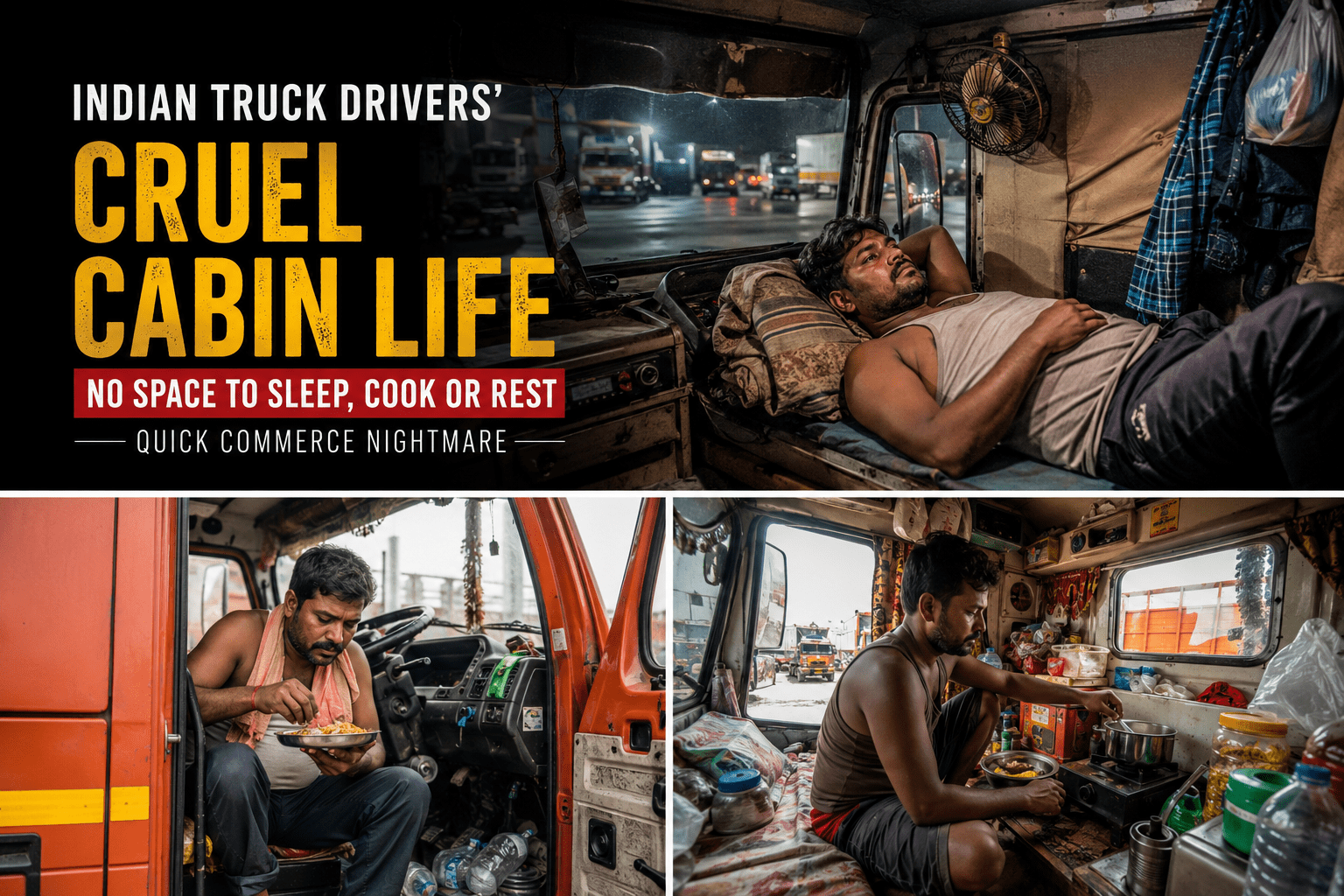
Indian Truck Drivers’ Cruel Reality: Sleeping & Cooking in Cramped Cabins – No Rest for Quick Commerce Heroes
Indian truck drivers are the unsung heroes powering the nation’s $200+ billion logistics industry, transporting everything from groceries to industrial goods across vast distances. Yet, their daily lives are marked by unimaginable hardships – cramped truck cabins where they can’t even stretch their legs, forced to sleep and cook in spaces barely fit for a child. In the booming quick commerce sector, drivers endure back-to-back trips with 2-3 hour TATs, loading/unloading, totaling 12-16 hours without proper rest. This isn’t just uncomfortable; it’s cruel, leading to health crises, fatal accidents, and broken families. This comprehensive article dives deep into the problem, its impacts, and practical solutions.
भारतीय ट्रक ड्राइवर देश के 200+ अरब डॉलर के लॉजिस्टिक्स उद्योग के अनसुने हीरो हैं, जो ग्रॉसरी से औद्योगिक सामान तक सब ढोते हैं। लेकिन उनकी जिंदगी बेहद कठिन – छोटे कैबिन जहां पैर फैलाना भी नामुमकिन, सोना-खाना वहीं। क्विक कॉमर्स में 2-3 घंटे TAT वाले लगातार ट्रिप्स, लोड-अनलोड के साथ 12-16 घंटे बिना आराम। यह सिर्फ असुविधा नहीं, क्रूरता है – स्वास्थ्य संकट, घातक हादसे और टूटे परिवार। यह विस्तृत लेख समस्या, प्रभाव और समाधान पर गहराई से चर्चा करता है।
Cramped Cabins: No Room to Stretch Legs Even for Sleep
Standard Indian truck cabins, especially in Light Commercial Vehicles (LCVs) like Mahindra Bolero pickups, Ashok Leyland Dost, and 14-17-20 feet cargo vehicles, measure just 1.2-1.5 meters wide. Drivers can’t lie flat; they push the seat forward, lay a thin mattress on the engine cover, and curl up like fetuses. Engine heat radiates through the floor, dust seeps in from rusty vents, and constant vibrations jolt them awake every few minutes. For long-haul drivers, this is their “bedroom” for months; for quick commerce warriors, it’s a 4-5 hour snatched sleep between shifts. Imagine trying to rest with knees touching the dashboard and head brushing the roof – pure torture that triggers chronic back pain, sciatica, and insomnia.
Even premium trucks from Tata or BharatBenz offer marginal improvements, but LCVs dominate urban deliveries where space is premium. Drivers report waking up with numb limbs, sweaty clothes, and zero refreshment, starting their next grueling day already exhausted. This space crunch isn’t accidental; it’s a design flaw rooted in cost-cutting and outdated regulations ignoring human ergonomics.
मानक भारतीय ट्रक कैबिन, खासकर LCV जैसे महिंद्रा बोलरो पिकअप, अशोक लेलैंड दोस्त, 14-17-20 फीट कार्गो वाहनों में चौड़ाई महज 1.2-1.5 मीटर होती है । ड्राइवर फ्लैट नहीं लेट पाते हैं ; सीट आगे खिसकाकर इंजन कवर पर पतला गद्दा बिछाते हैं , भ्रूण की तरह गुड़गुड़ाते रहते हैं । इंजन की गर्मी फर्श से आती रहती है , धूल जंग लगे वेंट से घुसती रहती है और कंपन हर मिनट जगाता रहता है । लॉन्ग-हॉल के लिए महीनों का ‘बेडरूम’; क्विक कॉमर्स के लिए 4-5 घंटे चुराई नींद, घुटने डैशबोर्ड छूते हुए , सिर छत – पीड़ा जो कमर दर्द, सायटिका, अनिद्रा – ये सब किसी एक ड्राइवर की बात नहीं है, आप लक्ज़री ट्रक्स को छोड़ दे तो 90 % ड्राइवर भाइयो की यही स्थिति है ।
Cooking in Cabins: Hygiene Nightmares & Fire Hazards
With no time for dhabas amid tight schedules, drivers turn their cabins into makeshift kitchens. A small gas stove, half-liter cylinder, dented utensils – all squeezed beside the gear lever. Fumes fill the airless space, smoke blackens the windshield, and oil splatters on hot engine parts risk instant fires. In summer, food spoils within hours without refrigeration; in monsoons, dampness breeds bacteria. Quick commerce drivers, rushing Blinkit or Zepto orders, cook one-pot meals like dal-chawal while parked illegally on flyovers, heightening accident risks.
This improvisation stems from necessity – dhabas charge ₹100-200 per meal, unaffordable on ₹800-1200 daily earnings. Health toll? Gastro issues, respiratory problems from fumes, burns from spills. Women drivers face added dangers cooking alone at night. It’s a ticking bomb for road safety too; distracted cooking leads to rear-end collisions.
टाइट शेड्यूल में ढाबे का समय न होने पर कैबिन ही किचन बन जाता है । छोटा गैस स्टोव, आधा लीटर सिलेंडर, कुचले बर्तन – गियर लेवर के पास पड़े होते है , धुआं ही धुआ , स्मोक विंडशील्ड कालिख कर कर देता है , तेल इंजन पर गिरे या आग भी लग सकती है । गर्मी में खाना घंटों में खराब हो जाता है ; मानसून में नमी बैक्टीरिया का खतरा होता है । क्विक कॉमर्स ड्राइवर ब्लिंकिट-जेप्टो order rush में flyover पर अवैध पार्किंग में दाल-चावल बनाते और हादसे का शिकार होते अक्सर देखे जाते हैं ।
Brutal Schedules: 12-16 Hours Non-Stop, Zero Sleep Guarantee
Motor Transport Workers Act mandates 8-hour shifts, but reality bites harder. Quick commerce demands minimum 2 trips/day: 2-3 hours one-way drive + 2-3 hours loading/unloading per trip = 8-12 hours minimum, often stretching to 16 with traffic. No breaks for meals or restroom; drivers pee in bottles during peaks. Long-haul adds 500-1000 km daily, sleeping only when stranded. Fatigue causes 30-40% accidents per NHAI stats – drowsy drivers veer off expressways at 100 km/h.
Families suffer too: Kids grow without fathers, wives manage alone. Driver shortage worsens as youth shun trucking for safer jobs. Pandemic exposed vulnerabilities; strikes in 2024-25 demanded rest reforms.
Health & Safety Crisis: Back Pain to Fatal Crashes
Chronic sleep deprivation triggers hypertension, diabetes, heart disease – truckers’ life expectancy is 10-15 years shorter. Cramped postures cause spinal deformities; fumes lead to COPD. Mental health crumbles: Isolation, abuse from transporters, debt traps. Road safety plummets – WHO links driver fatigue to 20% global road deaths. Women drivers (rising to 5%) face harassment, assault risks at lonely stops.
Proposed Solutions: Building a Driver-Friendly Ecosystem
1. Revamp Cabin Designs for Human Comfort
Mandate 1.8m+ wide cabins with foldable sleeper berths, insulated engine covers, AC vents. LCVs need modular extensions – pop-out beds, safe cooking zones. Subsidize retrofits via scrappage policy. Tata Motors’ pilot Prima cabins show promise.
2. Highway Rest Infrastructure Revolution
NHAI’s Bharatmala must include truck plazas every 50km: Dormitories (500 beds), hygienic canteens, EV charging, CCTV security. PPP models like IRCTC highways. Urban quick commerce hubs with 2-hour rest pods.
भारतमाला में हर 50km ट्रक प्लाजा: 500 बेड डॉरमिटरी, साफ कैंटीन, EV चार्जिंग, CCTV। PPP जैसे IRCTC। शहरों में क्विक कॉमर्स हब्स विथ 2-घंटे रेस्ट पॉड्स।
3. Strict Hours & Tech Enforcement
GPS logbooks cap 8-hour drives, mandate 10-hour rests. Quick commerce apps flag violations, pay overtime. AI dashcams detect drowsiness.
GPS लॉगबुक 8-घंटे ड्राइव कैप, 10-घंटे रेस्ट अनिवार्य। ऐप्स उल्लंघन फ्लैग, ओवरटाइम पे। AI डैशकैम नींद पकड़े।
4. Welfare Programs & Training

Free health camps by AIIMS, yoga sessions at plazas. Driver unions negotiate better pay (₹1500+/day). CSR from Amazon/Flipkart for rest homes.
AIIMS फ्री हेल्थ कैंप, प्लाजा पर योगा। यूनियन ₹1500+/दिन वेतन। अमेजन/फ्लिपकार्ट CSR से रेस्ट होम। Key Problems vs Solutions Matrix ProblemCurrent RealityProposed Fix Cabin Space1.2-1.5m wide, curled sleep1.8m+ with foldable berths Cooking RisksStove near gear, fire hazardModular safe kitchens, plazas Rest Shortage12-16hr shifts dailyGPS caps + 50km plazas Quick Commerce2 trips/8hrs no breakExtra drivers + rest pods Health CrisisShort lifespan, accidentsHealth camps + AI monitoring
समस्याएं बनाम समाधान :
मुख्य समस्याएं बनाम समाधान समस्या वर्तमान स्थिति प्रस्तावित समाधान कैबिन स्पेस1.2-1.5m चौड़ाई, गुड़गुड़ सोना 1.8m+ फोल्डेबल बर्थ, खाना जोखिम गियर पास स्टोव, आग खतरा मॉड्यूलर किचन, प्लाजा आराम कमी 12-16 घंटे शिफ्ट GPS कैप + 50km प्लाजा क्विक कॉमर्स2 ट्रिप्स/8घंटे बिना ब्रेक एक्स्ट्रा ड्राइवर + पॉड्स स्वास्थ्य संकटकम उम्र, हादसे हेल्थ कैंप + AI मॉनिटरिंग
FAQ: Truck Drivers’ Struggles Answered
Why can’t truck drivers stretch legs in cabins?
LCV cabins are 1.2m wide for cost; premium trucks slightly better but urban deliveries use LCVs.
How many hours do quick commerce drivers work?
2 trips = 8-12 hours driving/loading; peaks hit 16 hours without mandated rest.
Are highway rest areas available?
Scarce; expressways lack them. NHAI planning 1000+ plazas by 2030.
How to improve cabin comfort?
Wider designs, insulation, foldable features – government mandates needed.
What laws protect drivers?
8-hour shifts exist on paper; GPS enforcement and penalties required.
FAQ हिंदी में:
ट्रक कैबिन में पैर क्यों नहीं फैला पाते?
LCV कॉस्ट के लिए 1.2m चौड़े; प्रीमियम थोड़ा बेहतर लेकिन शहर LCV यूज।
क्विक कॉमर्स ड्राइवर कितने घंटे काम करते?
2 ट्रिप्स = 8-12 घंटे ड्राइव/लोड; पीक में 16 बिना आराम।
हाईवे पर रेस्ट एरिया हैं?
कम; एक्सप्रेसवे पर न के बराबर। NHAI 2030 तक 1000+ प्लाजा प्लान।
कैबिन कम्फर्ट कैसे सुधारें?
चौड़े डिजाइन, इंसुलेशन, फोल्डेबल – सरकारी आदेश जरूरी।
ड्राइवरों की सुरक्षा के कानून?
8-घंटे शिफ्ट कागज पर; GPS प्रवर्तन-पेनल्टी चाहिए।
Call to Action: Share this article to highlight truck drivers’ plight. Demand better cabins, rest stops, and laws from @NHAI_official, truck makers. Together, let’s humanize logistics! #TruckDriverWelfare #SaveOurDrivers #brutalquickcommerce
2 thoughts on “Indian Truck Drivers’ Cruel Cabin Life: No Space to Sleep, Cook or Rest – Quick Commerce Nightmare”